

18 Feb García-Alix in the new contemporary art collection of Reina Sofía Museum
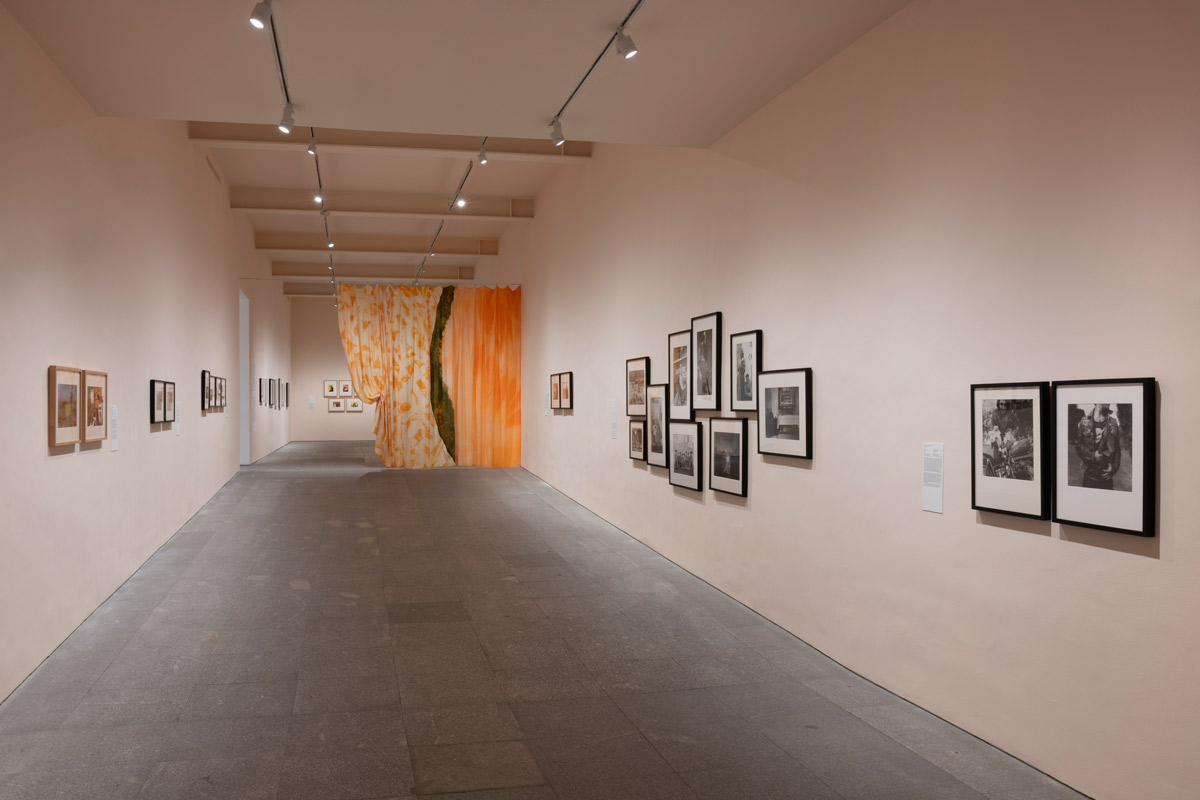
Reina Sofía Museum has unveiled its new collection, CONTEMPORARY ART: 1975-PRESENT. This new presentation of the Museum’s collections recounts fifty years of art history in Spain, from the Transition to the present day, through a selection of 403 works by 224 artists. The new narrative aims to highlight the contribution of contemporary Spanish art via three exhibition routes.
The exhibition, unveiled for public display from 18 February, stretches across the entire fourth floor of the Sabatini Building, totalling more than 3,000 square metres. Its arrangement is linear and sometimes non-chronological and ranges across twenty-one chapters, comprising well-known pieces from the Reina’s Collections and acclaimed artists such as Picasso, Miró, Dalí, Juan Genovés, Juan Muñoz, Cristina Iglesias, Susana Solano, Juan Navarro Baldeweg, Esther Ferrer, Cristina García Rodero, Richard Serra and Andy Warhol; figures closely entwined with the Transition to democracy in Spain and Madrid’s Movida movement, for instance Guillermo Pérez Villalta, Ocaña, Ouka Leele, Ceesepe, Nazario, Iván Zulueta and Alberto García-Alix; artists whose practice is linked to gender sensibilities, for instance Judy Chicago, Barbara Hammer, Eulàlia Grau, David Wojnarowicz, Pilar Albarracín and Cabello/Carceller; and key figures in the cultural, political and social representation of AIDS, such as Pepe Espaliú and Pepe Miralles. Furthermore, it includes other artists who approach their work from political and theoretical stances within the critical framework of representation, for example Joan Fontcuberta and Dora García, and those who have developed different approaches to Afro identity, for example Pocho Guimaraes, Agnes Essonti and Rubén H. Bermúdez.
The new presentation features three works by photographer Alberto García-Alix: Twins, 1987; Edi’s Jacket, 1987 and In the Absence of Willy, 1988. Another relevant point to emphasise is that 258 works are hitherto (64%) unexhibited; that is, over half of the pieces on view on this floor are displayed for the first time as part of the Museo’s Permanent Collection.
More information at Museo Reina Sofía.
Sorry, the comment form is closed at this time.